Main Branches of Philosophy
Philosophy is less a single subject than a set of persistent questions whose boundaries overlap.
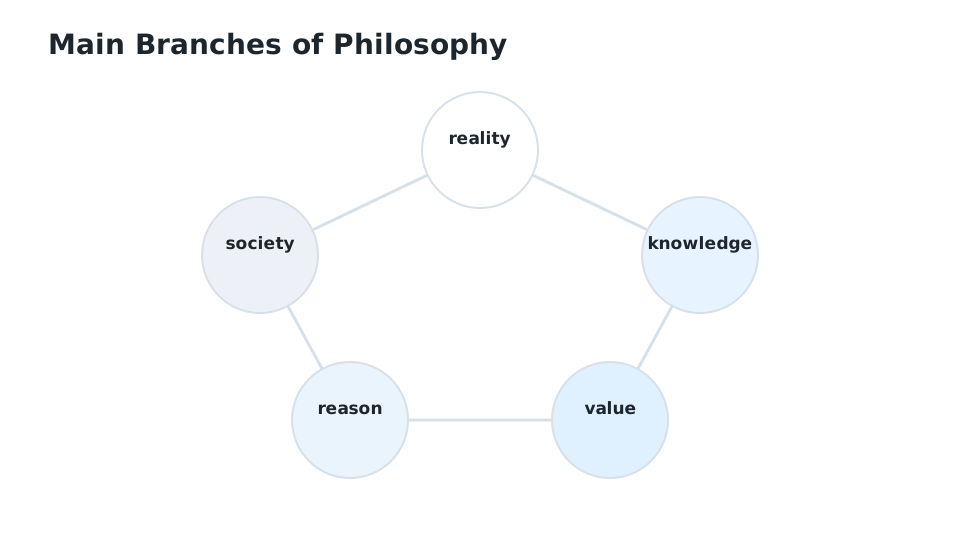
- Metaphysics — What exists? What are causation, identity, possibility, time, mind, and free will?
- Epistemology — What is knowledge? When is belief justified, and what can perception/reason/testimony actually support?
- Ethics — What makes actions, character, lives, or institutions good or bad?
- Logic — Which conclusions follow from which premises, and what makes an inference valid?
- Political philosophy — What justifies power? What are justice, rights, liberty, equality, and legitimate government?
- Aesthetics / philosophy of art — What is art? What is aesthetic value, and how do interpretation, taste, beauty, and expression work?
Big idea: These are organizing questions, not watertight departments. Plato's ethics depends on his theory of knowledge; political philosophy depends on ethics; philosophy of mind crosses metaphysics and epistemology.
Other major areas include philosophy of mind, language, science, religion, law, mathematics, technology, and phenomenology. They often grow where a broad philosophical question meets a particular domain.