Chess: From Chaturanga to the Modern Queen
Modern chess did not appear fully formed.
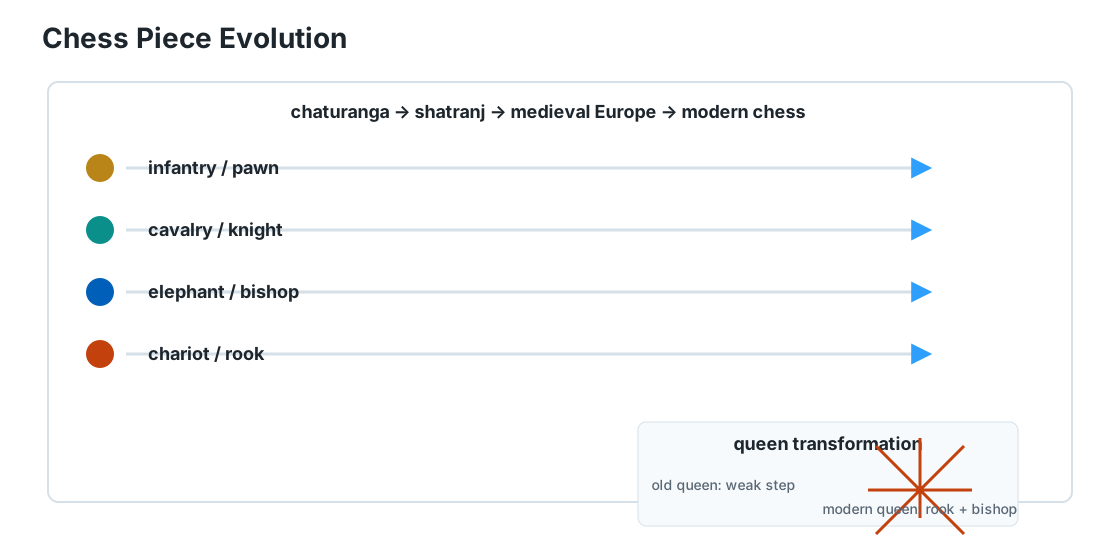
Its continuous historical line is usually traced to chaturanga in India around the 6th century CE.
The name referred to four divisions of an army:
- infantry
- cavalry
- elephants
- chariots
These became ancestors of:
- pawn
- knight
- bishop
- rook
India → Persia → Islamic world → Europe
Chaturanga moved into Persia, where it developed into shatranj.
After the Islamic conquest of Persia, shatranj spread widely through the Islamic world and eventually into Europe.
The movement history of several pieces still carries this journey.
For example, the modern bishop is descended from the elephant piece, but European cultures reinterpreted the piece's identity in different ways.
Medieval chess was slower
Shatranj and early European chess did not have today's extremely powerful queen and bishop.
The ancestor of the queen — the vizier/fers — was weak.
The elephant/bishop ancestor also had restricted movement.
Games therefore developed more slowly.
The late-15th-century acceleration
Around the late 1400s, European rules changed dramatically.
The queen acquired something close to its modern long-range movement.
The bishop also became much more powerful.
These changes transformed:
- opening speed
- attacking possibilities
- tactical violence
- value of development
- mating patterns
By around 1500, the game was recognizably close to modern chess.
This is an unusually clear example of rule evolution changing strategic character.
Later standardization
Other rules continued to settle over time:
- castling
- pawn double move
- en passant
- promotion conventions
- stalemate treatment
Competition later added standardized clocks, tournament rules and ratings.
FIDE was founded in 1924 and became the principal international governing body.
Strategy survived rule changes
Although the move set changed substantially, chess retained a recognizable identity:
- asymmetric piece powers
- king safety
- material
- space
- development
- tactical threats
- long-term positional structure
The modern game is therefore both ancient and relatively young.
Its ancestry is ancient; its current strategic engine was largely created by late-medieval rule changes.
A useful comparison with Go
Chess begins with a highly structured position and differentiated pieces.
Go begins nearly empty with identical stones.
Chess complexity comes partly from interactions among different movement rules.
Go complexity emerges from spatial relationships among identical units.
Both generate strategic depth, but by almost opposite design philosophies.
Main message: Chess is not a 1,500-year-old frozen rule set. It is a lineage whose most important strategic transformation occurred when the queen and bishop became powerful in late medieval Europe.