Permanent Daylight-Saving-Time Debates
There are actually two separate policy questions that often get collapsed into “stop changing the clocks”:
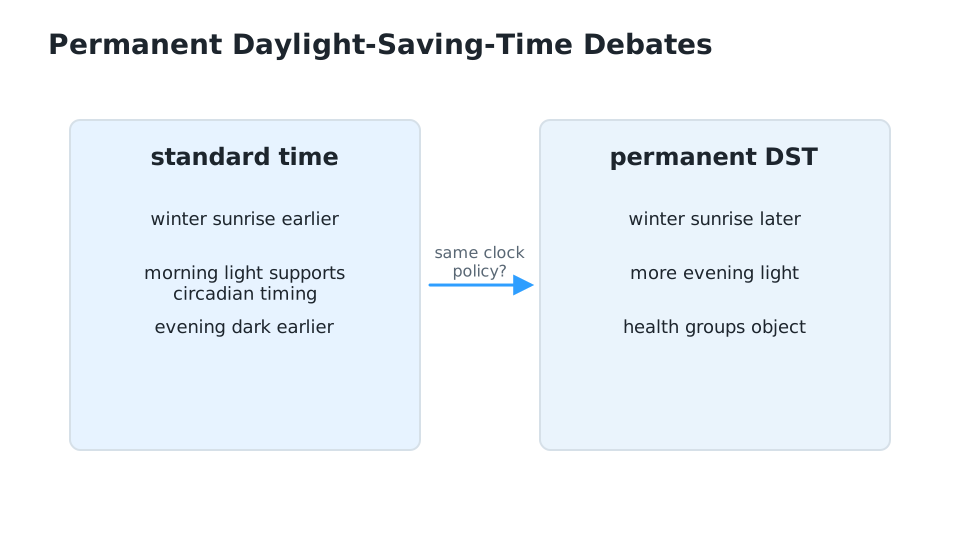
- permanent daylight saving time (DST) — later sunrise and later sunset by the clock;
- permanent standard time — clock noon stays closer to solar noon.
Most sleep/circadian organizations that take a position prefer permanent standard time, because morning light advances/stabilizes the body clock while evening light delays it. The American Academy of Sleep Medicine argues that standard time aligns better with human circadian biology.
The U.S. already tried year-round DST during the 1970s energy crisis. Congress enacted an emergency experiment beginning in January 1974, but dark winter mornings were unpopular and the policy was shortened; standard time returned for part of the year later in 1974.
Current U.S. status — August 2026
This is time-sensitive. On July 14, 2026, the U.S. House passed H.R. 139, the Sunshine Protection Act, by 308–117, proposing permanent DST. House passage did not by itself make permanent DST law; Senate action and presidential approval are still required.
Takeaway: “Permanent time” is not one proposal. The political preference for brighter evenings conflicts with the circadian-health argument for brighter mornings.