Distilled Spirit Families: Whisky, Brandy, Rum, Vodka, Gin, Tequila and Mezcal
Whisky, brandy, rum, vodka, gin, tequila and mezcal all contain distilled ethanol.
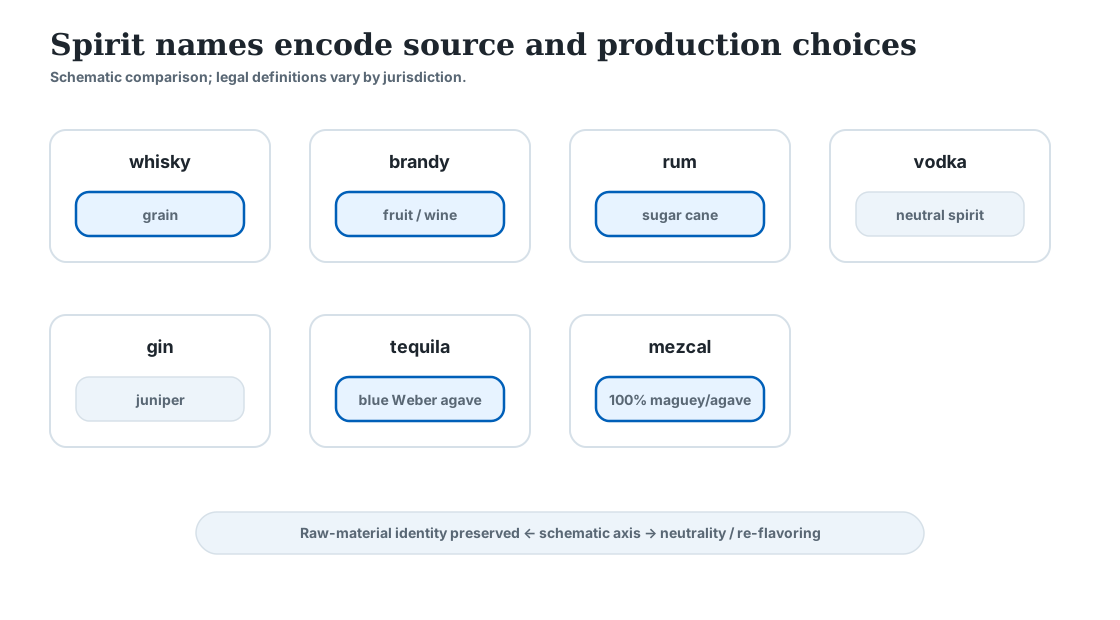
Their family names are not synonyms for different flavor profiles.
They encode raw materials, production methods, legal standards and geographic traditions.
Legal definitions vary by jurisdiction, so the comparisons below use current U.S. federal standards where appropriate and Mexican official standards for tequila and mezcal.
The compact comparison
| Spirit | Defining starting point | Core identity |
|---|---|---|
| Whisky | fermented grain mash | grain distillate with whisky character; many types have specific oak/grain rules |
| Brandy | fermented fruit juice, mash, wine or fruit residue | fruit-derived distillate |
| Rum | fermented sugar-cane juice, syrup, molasses or cane by-products | sugar-cane distillate |
| Vodka | highly rectified neutral spirit | deliberately neutral spirit under U.S. identity |
| Gin | spirit + juniper-centered botanical character | juniper must be the main characteristic flavor |
| Tequila | blue Weber agave in protected Mexican territory | specific agave + protected origin + tequila standard |
| Mezcal | 100% maguey/agave in protected Mexican territory | broader Agave species/process categories under its own standard |
That single table already explains more than “brown versus clear.”
Whisky: fermented grain
Under current U.S. standards, whisky is distilled from a fermented grain mash at less than 95% ABV, retains characteristic whisky properties, and is generally stored in oak barrels.
Specific whisky types have tighter rules.
For example, U.S. bourbon whisky uses a mash containing at least:
and is distilled no higher than 80% ABV before entering new charred oak under the prescribed proof limit.
“Straight bourbon” adds a minimum two-year storage requirement.
The important family-level lesson is simpler:
whisky begins with grain.
Barley, corn, rye and wheat can therefore matter before the still is ever heated.
Brandy: fermented fruit
Brandy starts somewhere else entirely.
The U.S. class definition covers spirits distilled from fermented:
- fruit juice;
- fruit mash;
- wine;
- certain fruit residues.
Unqualified brandy in the U.S. is associated with grape brandy under the detailed standard, while other fruits are named accordingly.
This immediately explains the basic whisky/brandy difference Gavin wanted to remember:
whisky → grain
brandy → fruit
Both may be aged in oak.
Both may be amber.
Color is not the useful classification rule.
Raw material is.
Rum: the sugar-cane family
Rum begins with sugar cane.
Under the U.S. standard it can derive from fermented:
- sugar-cane juice;
- sugar-cane syrup;
- molasses;
- other cane by-products.
That means two rums can start with materially different cane substrates and still belong to the same broad family.
Rum can be clear or aged, light or intensely flavored.
Again, color is secondary.
The sugar-cane origin is the anchor.
Vodka: separation taken toward neutrality
Vodka is an interesting contrast because the defining idea is less about preserving obvious agricultural character.
Under current U.S. rules, vodka is a type of neutral spirit.
Neutral spirit is distilled to very high alcohol concentration — at least 95% ABV under the federal definition — and is deliberately characterized by neutrality rather than the distinctive grain/fruit/cane signature expected of whisky, brandy or rum.
That explains a fact that otherwise seems strange:
vodka does not have to come from one sacred raw material.
Potatoes are famous.
Grain is common.
Other fermentable agricultural sources can be used.
Strong rectification deliberately makes the final distillate less dependent on the sensory identity of the original ferment.
Gin: define the spirit by what you put back into the sensory foreground
Gin demonstrates the opposite move.
Start with spirit and make juniper the central characteristic flavor.
U.S. rules allow several production paths — original distillation, redistillation, or mixing neutral spirit with or over juniper and optional other aromatics or their extracts — but the main characteristic flavor must come from juniper berries.
So:
vodka → neutrality is central
gin → juniper-centered botanical identity is central
That is a much better distinction than:
both are clear, but gin tastes like a Christmas tree.
Tequila: a specific agave, place and legal standard
Tequila is not simply:
any distilled agave drink.
Mexico's official tequila standard requires material from:
Agave tequilana Weber var. azul — blue Weber agave — grown in the protected tequila territory.
The standard recognizes two categories.
100% agave tequila
All fermentable sugar contribution must come from the specified blue agave.
Tequila
The ordinary category may include other permitted sugars, but no more than 49% of total reducing sugars may come from those other sources.
So ordinary tequila is at least 51% blue-agave-derived fermentable sugar under the standard's formulation rule.
Tequila also has maturation classes including:
- blanco/plata;
- reposado;
- añejo;
- extra añejo.
Reposado requires at least two months of direct contact with oak/encino.
Añejo requires at least one year in barrels no larger than 600 L.
Extra añejo requires at least three years in such barrels.
Those are legal categories, not merely marketing adjectives.
Mezcal: related to tequila, but not “smoky tequila”
Mexico's mezcal standard defines mezcal as a Mexican distilled beverage made from:
using mature cooked agave heads from the protected territory and fermented juice, followed by distillation.
Unlike tequila's requirement for blue Weber agave, the mezcal standard allows permitted agaves across the genus Agave subject to the protected-origin and regulatory rules.
It also recognizes process categories:
- Mezcal;
- Mezcal Artesanal;
- Mezcal Ancestral.
Their permitted cooking, milling, fermentation and distillation equipment differ.
This makes:
mezcal = smoky tequila
a bad definition.
Some mezcal acquires pronounced smoke character from pit-roasting agave.
But smoke is a consequence of some production methods, not the taxonomic essence of mezcal.
Tequila and mezcal are related because both are agave spirits.
They are different because their raw-material rules, protected regions and production standards are not the same.
A useful way to remember the shelf
Rather than memorizing brands:
GRAIN → whisky
FRUIT → brandy
SUGAR CANE → rum
HIGHLY RECTIFIED NEUTRAL SPIRIT → vodka
JUNIPER-CENTERED SPIRIT → gin
BLUE WEBER AGAVE + tequila rules → tequila
100% MAGUEY/AGAVE + mezcal rules → mezcal
Then aging, barrel choice, still type, microorganisms, climate, botanicals and blending produce variation inside those families.
Main message: Spirit families are histories encoded in production rules. Start with the fermentable source and what the distiller is trying to preserve, remove or add.