Gluconeogenesis
Gluconeogenesis literally means making new glucose. It keeps glucose available when dietary carbohydrate and liver glycogen are insufficient.
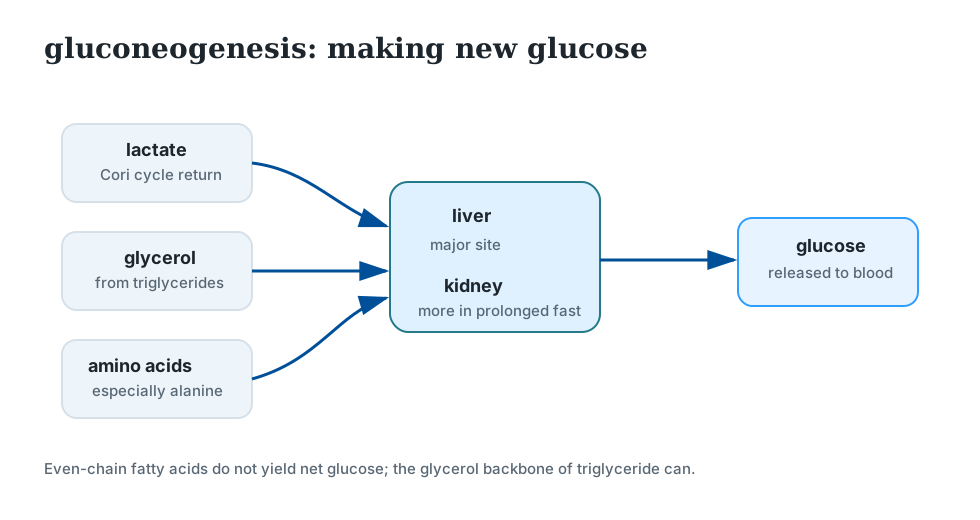
The main human sites are the liver and, increasingly during prolonged fasting, the kidney.
What carbon becomes glucose?
Three memorable sources:
- Lactate -> returned to the liver through the Cori cycle
- Glycerol -> released when triglycerides are broken down
- Glucogenic amino acids, especially alanine -> carbon skeletons feed the pathway
Most even-chain fatty acids cannot produce net glucose: their carbon becomes acetyl-CoA, and humans cannot convert acetyl-CoA into net glucose. The glycerol backbone of triglyceride can contribute, however.
Gluconeogenesis is not an emergency pathway that suddenly starts when glycogen reaches zero. It operates during ordinary fasting and contributes progressively more as glycogen availability falls. One clinical overview describes gluconeogenesis becoming measurably more important around 4-6 hours into fasting, and after an overnight fast a substantial share of glucose production already comes from gluconeogenesis.
The liver dominates early glucose production; the kidney contributes less at first but becomes more important during longer fasting. Insulin suppresses gluconeogenesis; glucagon and other counter-regulatory signals favor it.