Household Electrical Junction Boxes
A junction box is a protective enclosure for electrical connections. Its job is not cosmetic: it contains splices and live conductors, provides mechanical protection, helps contain sparks/arcing, and provides a place to bond/ground metal enclosures where required.
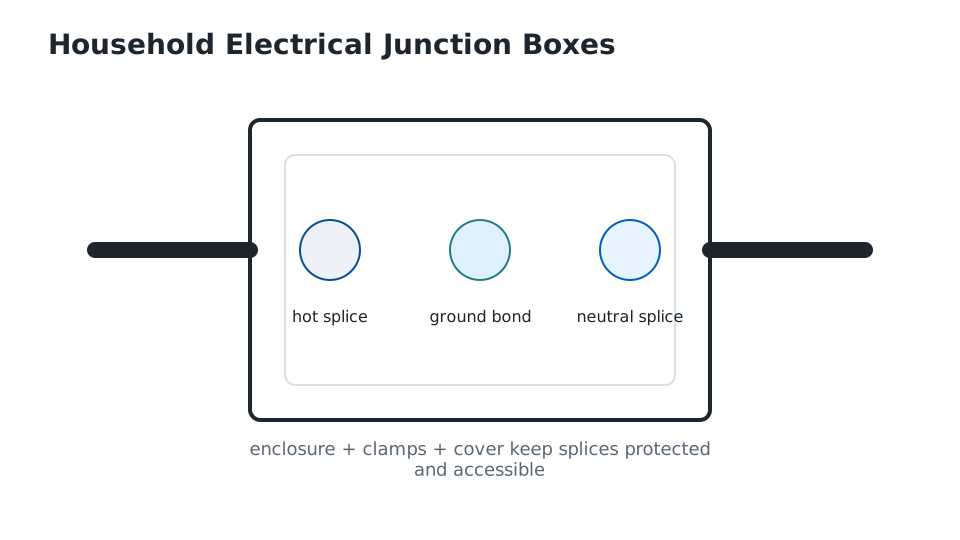
In ordinary U.S. wiring practice, splices should be made with listed/appropriate connectors inside an enclosure, and boxes need suitable covers. Electrical rules also require boxes containing wiring to remain accessible rather than being permanently buried behind finished construction.
A box's size is not arbitrary. Electrical codes use box-fill rules so conductors, clamps, grounds, and devices have enough volume; overstuffing a small old box makes damage, overheating, and servicing more likely.
Older houses can be awkward because junction/outlet boxes vary by era, shape, depth, mounting system, and wiring method. Modern light fixtures may include universal mounting brackets, but “standard” does not mean every 30-year-old ceiling box will physically match every new fixture without adaptation.
Safety boundary: this is an orientation entry, not a substitute for de-energizing a circuit, verifying it is dead, and following local electrical code. Unknown wiring, damaged insulation, aluminum branch wiring, missing grounding, or crowded boxes are reasonable places to stop and use an electrician.