Ketones
Ketone bodies are a way for the liver to package energy derived from fat into water-soluble molecules that can circulate to tissues -- especially the brain -- when carbohydrate availability and insulin signaling are low.
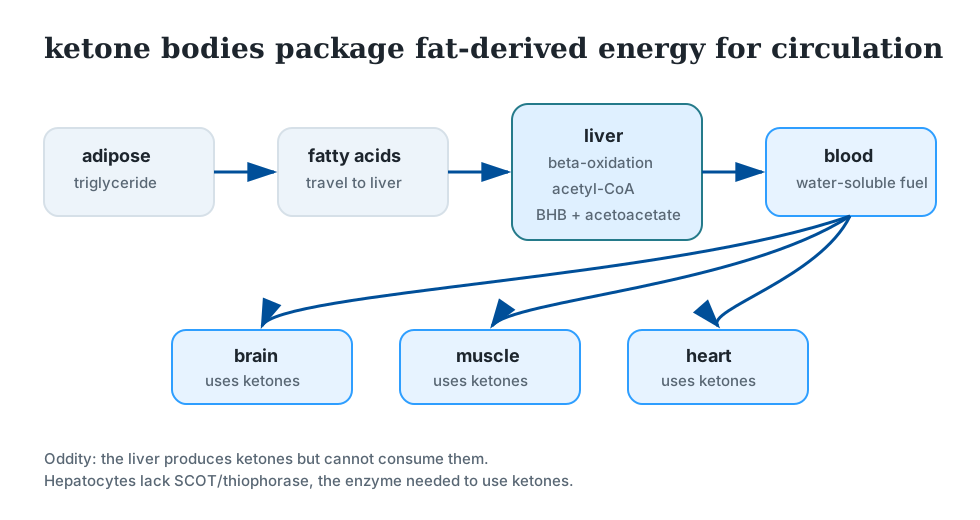
The three ketone bodies are:
- beta-hydroxybutyrate (BHB) -- usually the main measured blood ketone
- acetoacetate
- acetone -- volatile; partly exhaled
The metabolic trick
Fatty acids arrive at the liver and undergo beta-oxidation, producing acetyl-CoA. During fasting, oxaloacetate is increasingly drawn toward gluconeogenesis; excess acetyl-CoA is therefore diverted toward ketogenesis.
A memorable oddity: the liver makes ketones but cannot use them itself. Hepatocytes lack SCOT/thiophorase, the key enzyme required for ketone oxidation.
Useful numerical anchors
Blood BHB is ordinarily low on a mixed diet and after an overnight fast, commonly around 0.02-0.3 mmol/L. A commonly used operational threshold for nutritional ketosis is about >=0.5 mmol/L, with physiological nutritional/fasting ketosis often in roughly the 0.5-3 mmol/L neighborhood, though definitions and study cutoffs vary.
Do not confuse that number alone with DKA. Current diabetes criteria define significant DKA ketonemia as BHB >=3.0 mmol/L together with diabetes/hyperglycemia and metabolic acidosis. Acidosis -- not "ketones exist" -- is what makes ketoacidosis dangerous.