Family Relationship Map: Ancestors, Descendants, Aunts, Uncles, Nieces, Nephews
Cousin terminology handles collateral relatives — people descended from a shared ancestor through different branches.
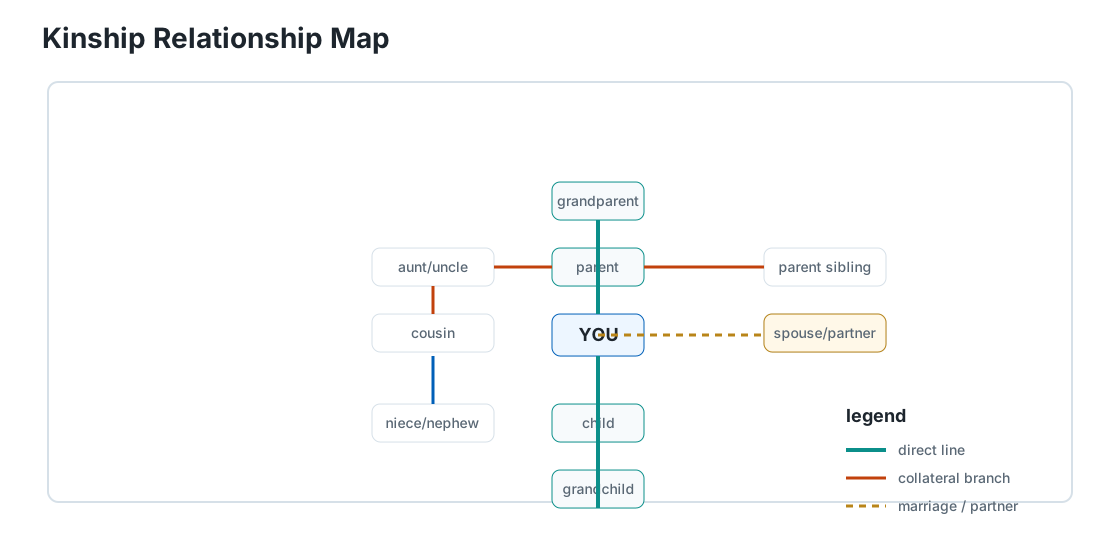
But a family tree contains three fundamentally different relationship directions.
1. Direct line
People directly above or below you:
great-grandparent
grandparent
parent
YOU
child
grandchild
great-grandchild
These are ancestors and descendants.
They are not cousins.
2. Sideways one generation
Your parent's sibling is your:
- aunt
- uncle
Their child is your first cousin.
Your sibling's child is your:
- niece
- nephew
This is the nearest collateral branch.
3. Sideways across multiple generations
Once branches descend further, cousin language becomes useful.
Your parent's first cousin is your:
first cousin once removed.
Your grandparent's first cousin is your:
first cousin twice removed.
This often surprises people because everyday speech may call such people "aunt" or "uncle" informally.
Great-aunt versus grand-aunt
Your grandparent's sibling is commonly called a:
- great-aunt / great-uncle
"Grand-aunt" and "grand-uncle" are also logically consistent forms and are used in some genealogical contexts.
Everyday English strongly favors great-aunt/great-uncle.
Affinity versus consanguinity
Genealogists distinguish relationships by blood/descent from relationships created by marriage.
A spouse's sibling is an in-law relationship, not a cousin relationship.
Adoptive, step, foster and chosen-family relationships may be socially central even when the genealogical tree is represented differently.
A good family tree therefore needs to distinguish:
- biological descent
- legal/adoptive parentage
- marriage/partnership
- step relationships
without implying that one kind is socially "more real."
Kinship systems vary across cultures
English kinship terminology is only one system.
Some languages distinguish maternal and paternal uncles.
Others distinguish older and younger siblings.
Some classify relatives whom English calls "cousins" using sibling-like terms.
So the cousin rules in the previous entry explain English genealogical terminology, not a universal human way of organizing kinship.
Main message: A family tree is geometry: direct vertical lines are ancestors/descendants; the first sideways branch produces aunts/uncles and nieces/nephews; deeper sideways branches produce cousins.