Nexus — Yuval Noah Harari
The book in one sentence
Yuval Noah Harari's Nexus: A Brief History of Information Networks from the Stone Age to AI (2024) argues that human power has always depended on information networks, and that AI is historically unusual because parts of the network can now generate texts, decisions, and strategies without a human author at every step.
Main ideas
- More information does not automatically produce more truth. Networks often optimize coordination, order, identity, or power rather than accuracy.
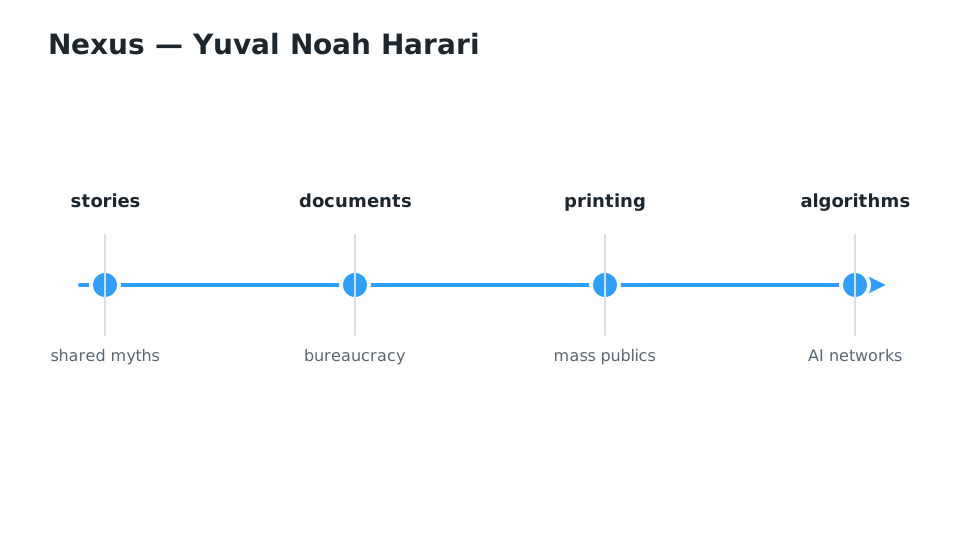
- Myths, religions, bureaucracies, archives, printing, mass media, and computer networks are different technologies for creating large-scale shared order.
- Self-correcting institutions need mechanisms that allow information about their own errors to flow back into the system.
- Harari treats AI as a new kind of participant in information networks because algorithms can increasingly make/mediate decisions and generate cultural material rather than merely transmit human-written messages.
- The political danger is not only a superintelligent robot. It is ordinary institutions becoming dependent on opaque, fast-moving automated information systems that humans cannot meaningfully audit or correct.
Structure map
The book moves from long-run information-network history through religious/bureaucratic and totalitarian/democratic systems, then turns to computers and AI. The historical material is used to frame the final governance question: what institutions can keep machine-mediated networks corrigible and accountable?
Worth remembering
Takeaway: Harari offers a large-scale interpretive framework rather than a neutral textbook history or settled theory of information. His concepts are broad and illuminating, but that breadth can flatten important differences between historical institutions and technical AI systems.