Sleep Architecture
A normal night's sleep is not eight hours of one state. The brain repeatedly cycles through N1 -> N2 -> N3 -> back toward lighter NREM -> REM, with the mixture changing over the night.
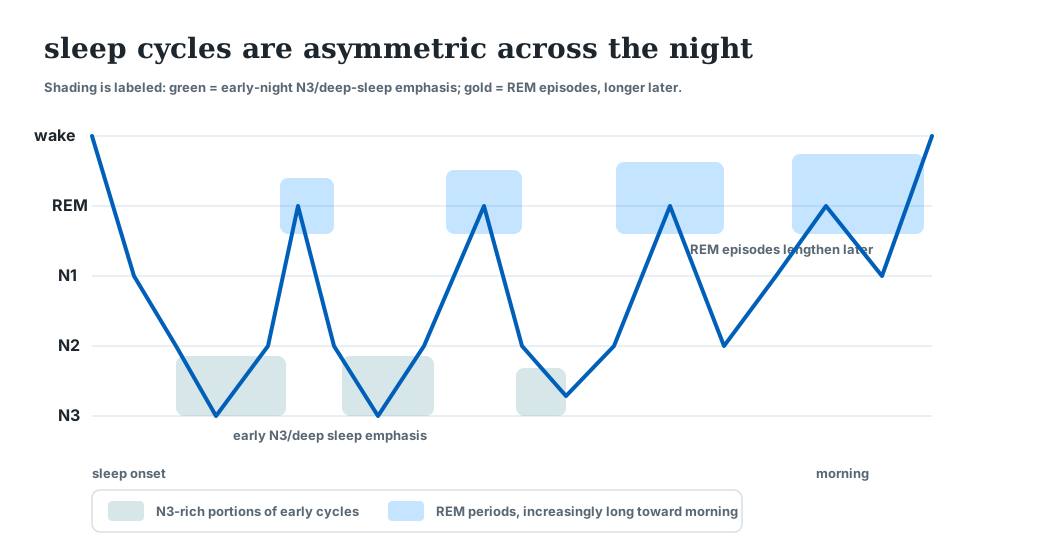
A first adult sleep cycle is often roughly 70-100 minutes, with later cycles commonly around 90-120 minutes, giving about 4-5 cycles in a typical full night.
Rough adult proportions
These are useful anchors rather than personal targets:
| Stage | Approx. share | What distinguishes it |
|---|---|---|
| N1 | ~5% | transition into sleep; very light |
| N2 | ~50% | dominant stage; sleep spindles and K-complexes |
| N3 | ~15-25% | deep / slow-wave sleep |
| REM | ~20-25% | rapid eye movements, wake-like cortical activity, muscle atonia |
NREM sleep as a whole is therefore roughly 75-80% of total sleep, with REM making up most of the rest.
The night is asymmetric
Early cycles contain more N3 deep sleep. As morning approaches, N3 shrinks and REM periods become longer. This means losing the last few hours of sleep disproportionately removes REM-rich sleep rather than simply removing an interchangeable block.
Two clocks determine whether you sleep
- Homeostatic sleep pressure builds the longer you stay awake and dissipates during sleep.
- Circadian timing changes sleepiness/alertness according to biological time.
The interaction explains why being awake for many hours does not guarantee effortless sleep at every clock time.