Tardigrades and Cryptobiosis
Tardigrades are microscopic eight-legged animals whose famous toughness mostly comes from a specific trick: some species can suspend ordinary life when their environment becomes unlivable.

When severe drying triggers anhydrobiosis, a tardigrade contracts into a compact tun and loses most of its body water. Metabolism falls to an extremely low or effectively undetectable level. In this cryptobiotic state, cellular structures can be stabilized until water returns and metabolism resumes.
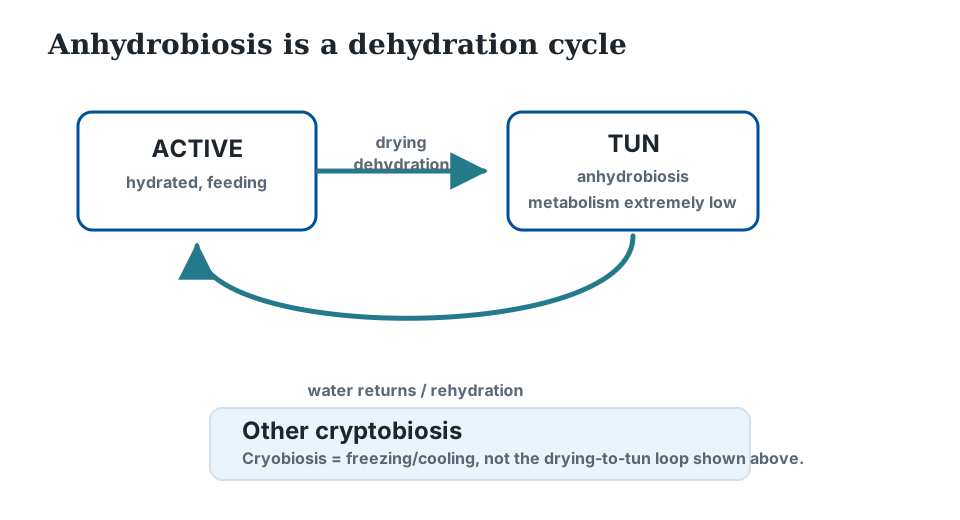
This explains why "tardigrades survive anything" is misleading. Active tardigrades are much less extraordinary. Their extreme tolerances depend on species, life stage, condition, and whether they have entered cryptobiosis.
The diagram focuses on anhydrobiosis, the dehydration-driven tun cycle. Other cryptobiotic responses exist, including cryobiosis associated with freezing/cooling, but radiation should not be drawn as if it simply triggers the same drying-to-tun loop.
Why radiation resistance is interesting
Radiation is not what cryptobiosis originally evolved to survive. One explanation for the cross-tolerance is that adaptations that protect against desiccation -- which causes severe molecular and DNA damage -- also help cope with radiation damage. Some tardigrades also show substantial radiation tolerance while hydrated, so the mechanism is more complicated than simply "dry animals cannot be damaged."