Vulnerability and Sacrifice Scoring
A bridge sacrifice is worthwhile only if the penalty for going down is cheaper than the score the opponents would have earned making their contract. Vulnerability changes both sides of that comparison.
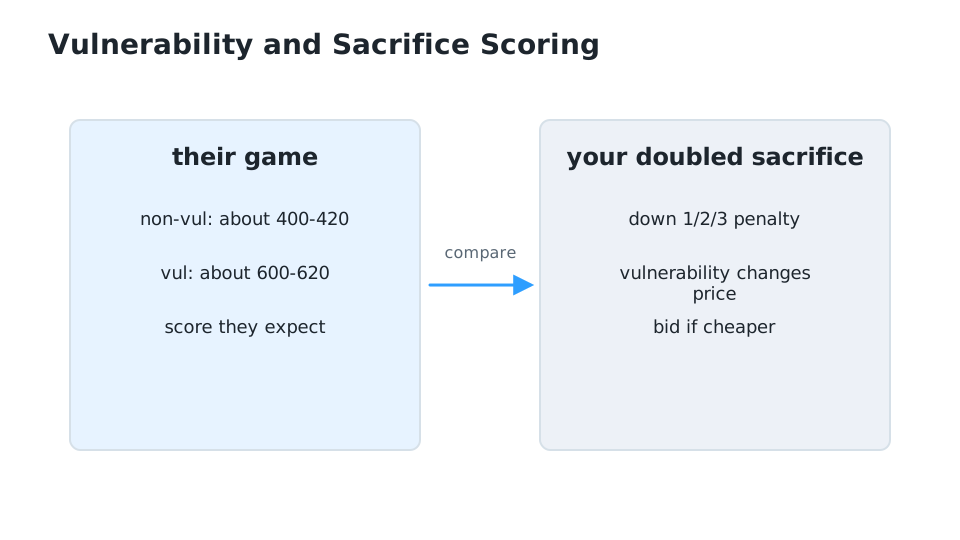
For a doubled contract, undertrick penalties are:
| Down | Not vulnerable | Vulnerable |
|---|---|---|
| 1 | 100 | 200 |
| 2 | 300 | 500 |
| 3 | 500 | 800 |
| 4 | 800 | 1100 |
After the first non-vulnerable doubled undertrick, the next two cost 200 each and later ones 300; vulnerable, every undertrick after the first costs 300.
Useful game comparisons:
- opponents make 4♥/4♠ non-vulnerable: normally 420 (without overtricks);
- opponents make 4♥/4♠ vulnerable: normally 620;
- your non-vulnerable sacrifice doubled down 2 = −300, usually attractive against either;
- down 3 = −500: cheaper than a vulnerable 620 game, but worse than a non-vulnerable 420 game;
- vulnerable sacrifice down 2 = −500, already expensive.
This is the origin of the practical “favorable vulnerability” idea: you are not vulnerable while they are.
At matchpoints, “cheaper than their game” is necessary but not sufficient — the field may not all bid/make the game, overtricks matter, and +/− score comparisons are against other pairs. At IMPs, raw-score difference maps more directly to the decision.