Geological Time Overview
Earth history is 4.54 billion years long, but the part most familiar from fossils occupies only a thin recent slice. The Phanerozoic Eon — abundant visible animal life — begins only 538.8 million years ago, roughly the last 12% of Earth's history.
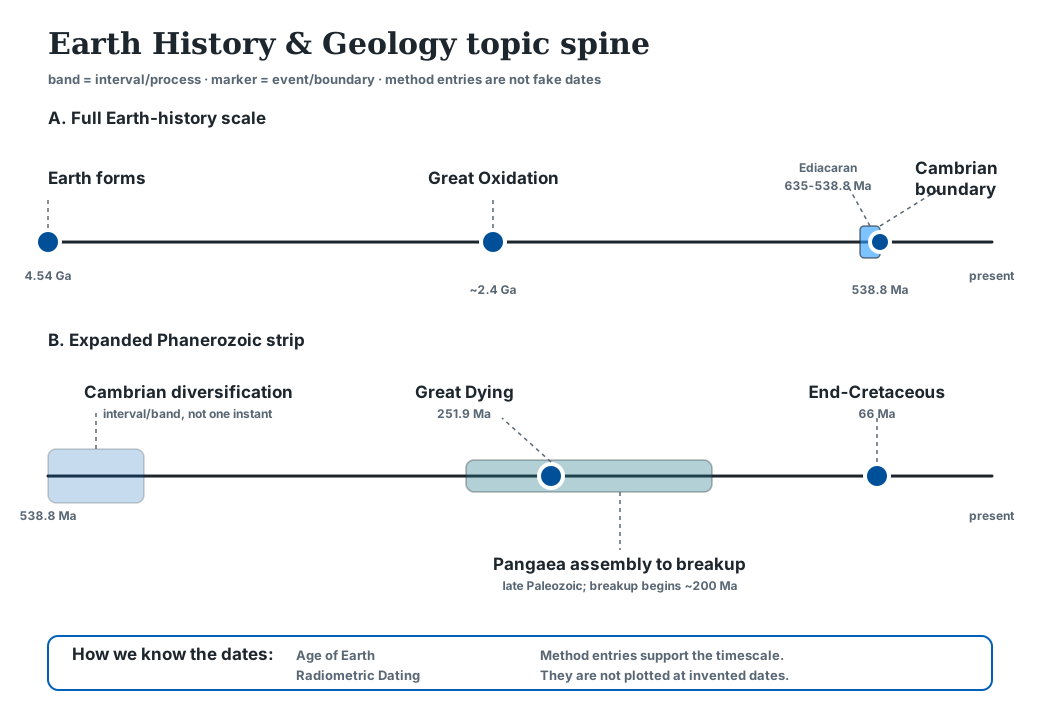
Useful anchors:
- 4.54 Ga: Earth forms.
- ≥3.5 Ga: unambiguous evidence of very early life exists by roughly this time; claims of older life remain debated.
- ~2.4 Ga: Great Oxidation Event permanently changes atmospheric/surface chemistry.
- 635–539 Ma: Ediacaran Period; macroscopic multicellular organisms become prominent.
- 538.8 Ma: Cambrian begins; the Cambrian diversification is a geologically short interval, not a single instant.
- 251.9 Ma: Permian–Triassic extinction, the Great Dying.
- late Paleozoic to ~200 Ma: Pangaea assembles, persists, and begins breaking apart.
- ~230 Ma: earliest dinosaurs.
- 66 Ma: end-Cretaceous extinction.
- ~300,000 years ago: Homo sapiens.
For scale, if Earth's history were compressed into one calendar year, Homo sapiens would arrive only about 35 minutes before midnight on December 31.
Takeaway: Human history is not merely short compared with geology; it is almost invisible on the planetary timescale.