The Great Dying
The Permian–Triassic extinction, about 251.9 million years ago, was the most severe known mass extinction. Exact percentages depend on how the fossil record is analyzed, but estimates commonly put marine species loss above 80%, with catastrophic disruption on land as well.
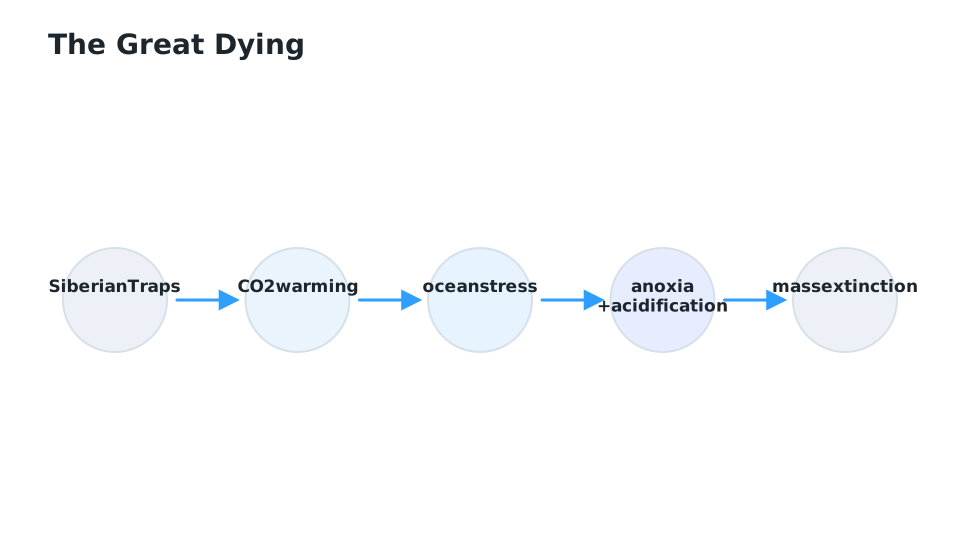
The leading culprit is not one impact but an enormous volcanic episode: the Siberian Traps. Vast eruptions released greenhouse gases and drove rapid warming. Cascading effects included ocean deoxygenation, acidification, habitat loss, and major disruption of the carbon cycle.
Big idea: Mass extinctions need not have a single dramatic “bullet.” The Great Dying looks more like a planetary systems failure, with volcanism pushing climate and ocean chemistry across multiple biological limits.
Recovery was slow. Ecosystems remained simplified for millions of years before complex communities were re-established.