Why Ice Is Slippery
Ice is slippery because the contact between a solid slider and ice is not simply dry solid-on-solid friction. Near the melting point, the surface has enhanced molecular mobility, and sliding can create or thicken a thin lubricating layer through frictional heating and interfacial disorder.
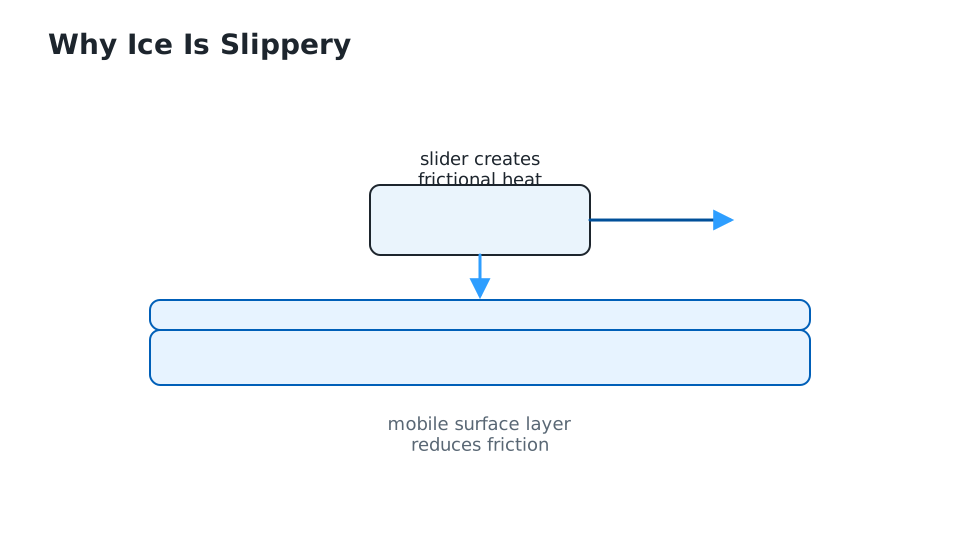
The old schoolbook explanation — “your weight increases pressure and melts the ice” — is incomplete. Pressure lowers ice's melting temperature only modestly at ordinary skate pressures and cannot explain slipperiness across the full range of temperatures and loads.
The awkward scientific truth is useful here: there is no single simple mechanism that explains every ice-friction regime. Temperature, speed, load, surface roughness, the slider material, frictional heating, and wear all change the contact.
At very low temperatures ice becomes noticeably less slippery because molecular mobility and melt lubrication are reduced. Close to 0 °C, too much meltwater can itself increase drag depending on the contact geometry.
Takeaway: Ice friction is a moving interfacial-physics problem, not merely “pressure melts ice.”