The Scale of the Observable Universe
The universe is about 13.8 billion years old, but the radius of the observable universe today is roughly 46 billion light-years, giving a diameter near 93 billion light-years.
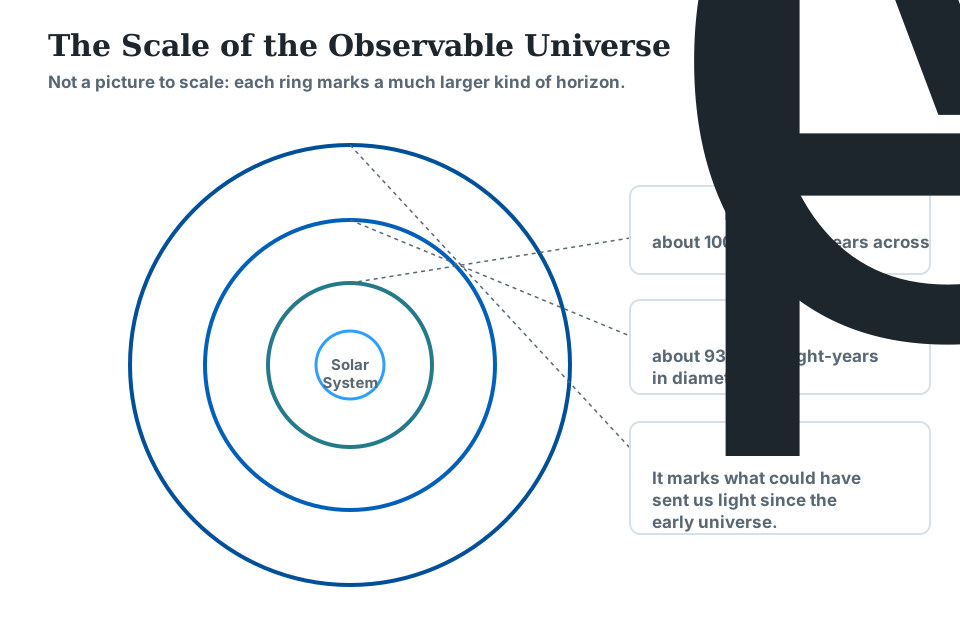
That is not a contradiction. The light from the most distant observable matter has been traveling for almost the age of the universe, but space expanded while the light was in transit. The matter that emitted that ancient light is now much farther away than “distance = light speed × travel time” would suggest in a static universe.
The oldest electromagnetic light we directly observe is the cosmic microwave background (CMB), released when the universe became transparent about 380,000 years after the Big Bang. We infer earlier epochs indirectly.
Big idea: The observable universe is a horizon, not an edge. It marks what could have sent us information since the early universe; the whole universe may extend vastly farther and may even be spatially infinite.
A scale anchor: our Milky Way is about 100,000 light-years across. The observable universe is therefore close to a million Milky-Way diameters across.